
X 日报:2026-10-27

🔥 Qwen-Image-2.1-Turbo is live.
The fastest, most affordable model in the Qwen-Image family — an accelerated version of Qwen-Image-2.1-Pro.
• 1 image in 10-20s
• $0.016 / image
The fastest, most affordable model in the Qwen-Image family — an accelerated version of Qwen-Image-2.1-Pro.
• 1 image in 10-20s
• $0.016 / image
🔥 Qwen-Image-2.1-Turbo 上线。
Qwen-Image 家族里最快、最便宜的型号——Qwen-Image-2.1-Pro 的加速版。
• 10-20 秒出一张图
• $0.016 / 张
Qwen-Image 家族里最快、最便宜的型号——Qwen-Image-2.1-Pro 的加速版。
• 10-20 秒出一张图
• $0.016 / 张

还记得 jev 吗?
vLLM 团队开源了一个新的 Jev 模型 d3-turbo,视觉榜第一被它拿下了。
Jev Decision Index 0.4.1 上,55 个视觉决策模型里它 72.46 分登顶。文本榜 67.31,比 TypeSafe 最新的 Jev 1.14(60.24)和 Cloudflare 的 Clef(54.92)都高,六个分项全部领先。
vLLM 团队开源了一个新的 Jev 模型 d3-turbo,视觉榜第一被它拿下了。
Jev Decision Index 0.4.1 上,55 个视觉决策模型里它 72.46 分登顶。文本榜 67.31,比 TypeSafe 最新的 Jev 1.14(60.24)和 Cloudflare 的 Clef(54.92)都高,六个分项全部领先。

以后再也不用请家教了!🤐
港大 HKUDS 开源了一个 AI 私教,叫 DeepTutor,GitHub 已经 4.3 万 star
它不是那种问一道答一道的聊天框
把课本、讲义、笔记丢进去,它就围绕你自己的资料来讲
讲题、出题、做深度研究、画可视化讲解,全在同一个工作区里
最狠的是它会记住你学到哪了
港大 HKUDS 开源了一个 AI 私教,叫 DeepTutor,GitHub 已经 4.3 万 star
它不是那种问一道答一道的聊天框
把课本、讲义、笔记丢进去,它就围绕你自己的资料来讲
讲题、出题、做深度研究、画可视化讲解,全在同一个工作区里
最狠的是它会记住你学到哪了

Introducing Rivet 3.0 (preview)
Built on S3 with SSD speeds
🏎️ 8ms actor coldstarts
🪶 0.7ms SQLite writes
🤏 78 KB of RAM per actor
🍱 Embed, self-host, or BYOC
📁 S3 is the only dependency, no database
Built on S3 with SSD speeds
🏎️ 8ms actor coldstarts
🪶 0.7ms SQLite writes
🤏 78 KB of RAM per actor
🍱 Embed, self-host, or BYOC
📁 S3 is the only dependency, no database
Rivet 3.0(预览版)发布
构建在 S3 上,却有 SSD 级速度
🏎️ actor 冷启动 8ms
🪶 SQLite 写入 0.7ms
🤏 每 actor 仅 78 KB 内存
🍱 可嵌入、自托管或 BYOC
📁 唯一依赖是 S3,没有数据库
构建在 S3 上,却有 SSD 级速度
🏎️ actor 冷启动 8ms
🪶 SQLite 写入 0.7ms
🤏 每 actor 仅 78 KB 内存
🍱 可嵌入、自托管或 BYOC
📁 唯一依赖是 S3,没有数据库

四十万首中国古诗词,居然被人整成了 API 直接打包带走?
刚在 GitHub 上挖到个开源项目 chinese-poetry-api,说白了就是把将近 40 万首古诗词捯饬成开箱即用的接口,你压根不用自己爬数据、清洗、建库,接口一调诗就到手了。
它收的货有这些:
1️⃣ 宋词、唐诗、元曲
2️⃣ 楚辞、诗经这类老经典
刚在 GitHub 上挖到个开源项目 chinese-poetry-api,说白了就是把将近 40 万首古诗词捯饬成开箱即用的接口,你压根不用自己爬数据、清洗、建库,接口一调诗就到手了。
它收的货有这些:
1️⃣ 宋词、唐诗、元曲
2️⃣ 楚辞、诗经这类老经典


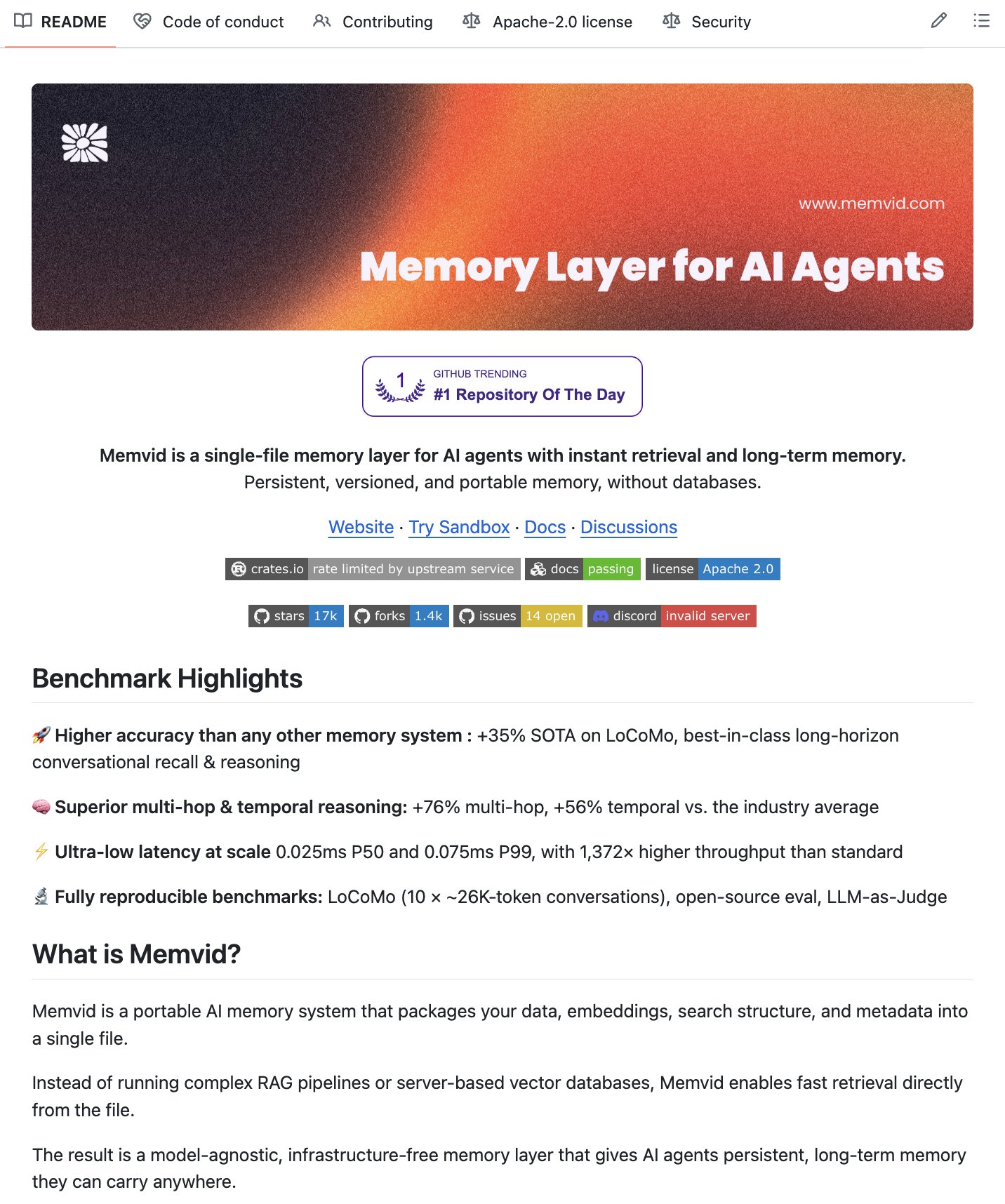
The entire RAG industry is getting challenged by… a single file 🤯
It’s called Memvid. It packages your agent’s data, embeddings, search index and metadata into one portable `.mv2` file.
The original version used MP4. The current version uses a purpose-built binary format.
- No separate database server
- Built-in text and vector search
- Append-only memory with history tracking
- Local, offline retrieval
- Python, Node.js, Rust and CLI support
Your agent’s memory becomes something you can copy, move and search without running a separate database service.
100% open-source.
整个 RAG 行业正受到……一个单一文件的挑战 🤯
它叫做 Memvid。它将你的代理的数据、嵌入、搜索索引和元数据打包成一个便携的 `.mv2` 文件。
原始版本使用 MP4。当前版本使用一种专为目的而构建的二进制格式。
- 无需单独的数据库服务器
- 内置文本和向量搜索
- 仅追加的内存,带有历史跟踪
- 本地、离线检索
- 支持 Python、Node.js、Rust 和 CLI
你的代理的记忆变成你可以复制、移动和搜索的东西,而无需运行单独的数据库服务。
100% 开源。
它叫做 Memvid。它将你的代理的数据、嵌入、搜索索引和元数据打包成一个便携的 `.mv2` 文件。
原始版本使用 MP4。当前版本使用一种专为目的而构建的二进制格式。
- 无需单独的数据库服务器
- 内置文本和向量搜索
- 仅追加的内存,带有历史跟踪
- 本地、离线检索
- 支持 Python、Node.js、Rust 和 CLI
你的代理的记忆变成你可以复制、移动和搜索的东西,而无需运行单独的数据库服务。
100% 开源。

OpenAI 刚刚宣布,它的 AI 推翻了计算机科学界相信了 25 年的一个核心假设。
而这居然只是今天公布的三项重大科学发现之一。
第一项是数学。OpenAI 声称,AI 证明了所有维度下的局部平滑猜想,由此解决了 Kakeya 猜想和 Stein 限制猜想。这些都是困扰数学家多年的基础性问题。
第二项更夸张。AI
而这居然只是今天公布的三项重大科学发现之一。
第一项是数学。OpenAI 声称,AI 证明了所有维度下的局部平滑猜想,由此解决了 Kakeya 猜想和 Stein 限制猜想。这些都是困扰数学家多年的基础性问题。
第二项更夸张。AI
Announcing three major scientific discoveries, one each in mathematics (harmonic analysis), computer science (complexity theory), and physics (quantum field theory).
AI starting to help us improve our understanding of the universe! https://openai.com/index/building-scientific-understanding-with-academic-communities/
AI starting to help us improve our understanding of the universe! https://openai.com/index/building-scientific-understanding-with-academic-communities/
宣布三项重大科学发现,分别在数学(调和分析)、计算机科学(复杂性理论)和物理(量子场论)。
AI 开始帮助我们加深对宇宙的理解!https://openai.com/index/building-scientific-understanding-with-academic-communities/
AI 开始帮助我们加深对宇宙的理解!https://openai.com/index/building-scientific-understanding-with-academic-communities/

They made their Notion replacement OPEN SOURCE!
It not only replaces Notion, but is also an email client for all of your emails account to replace Spark, or Mail app.
I have zero affilation, just a big fan so far.
No signs of AI slop either.
Run the open source, or just
It not only replaces Notion, but is also an email client for all of your emails account to replace Spark, or Mail app.
I have zero affilation, just a big fan so far.
No signs of AI slop either.
Run the open source, or just
他们把 Notion 替代品开源了!
不只替代 Notion,还是个聚合所有邮箱账户的邮件客户端,能顶掉 Spark 或系统邮件 App。
我没有利益关系,纯粹是粉丝。
也没有 AI 垃圾内容的痕迹。
可以自己跑开源版,也可以直接
不只替代 Notion,还是个聚合所有邮箱账户的邮件客户端,能顶掉 Spark 或系统邮件 App。
我没有利益关系,纯粹是粉丝。
也没有 AI 垃圾内容的痕迹。
可以自己跑开源版,也可以直接

JEV 把 AI 决策模型带火了,但如果让 AI 在现实世界里自己判断、及时提醒,会怎么样?
查了一下发现 VLX-Flow 和 VLX-Seek 这两个面向具身场景的流式视频理解与视觉定位模型!
一个能持续理解视频里正在发生什么,一个能精准定位画面中的目标,
我就在想,既然 AI
查了一下发现 VLX-Flow 和 VLX-Seek 这两个面向具身场景的流式视频理解与视觉定位模型!
一个能持续理解视频里正在发生什么,一个能精准定位画面中的目标,
我就在想,既然 AI

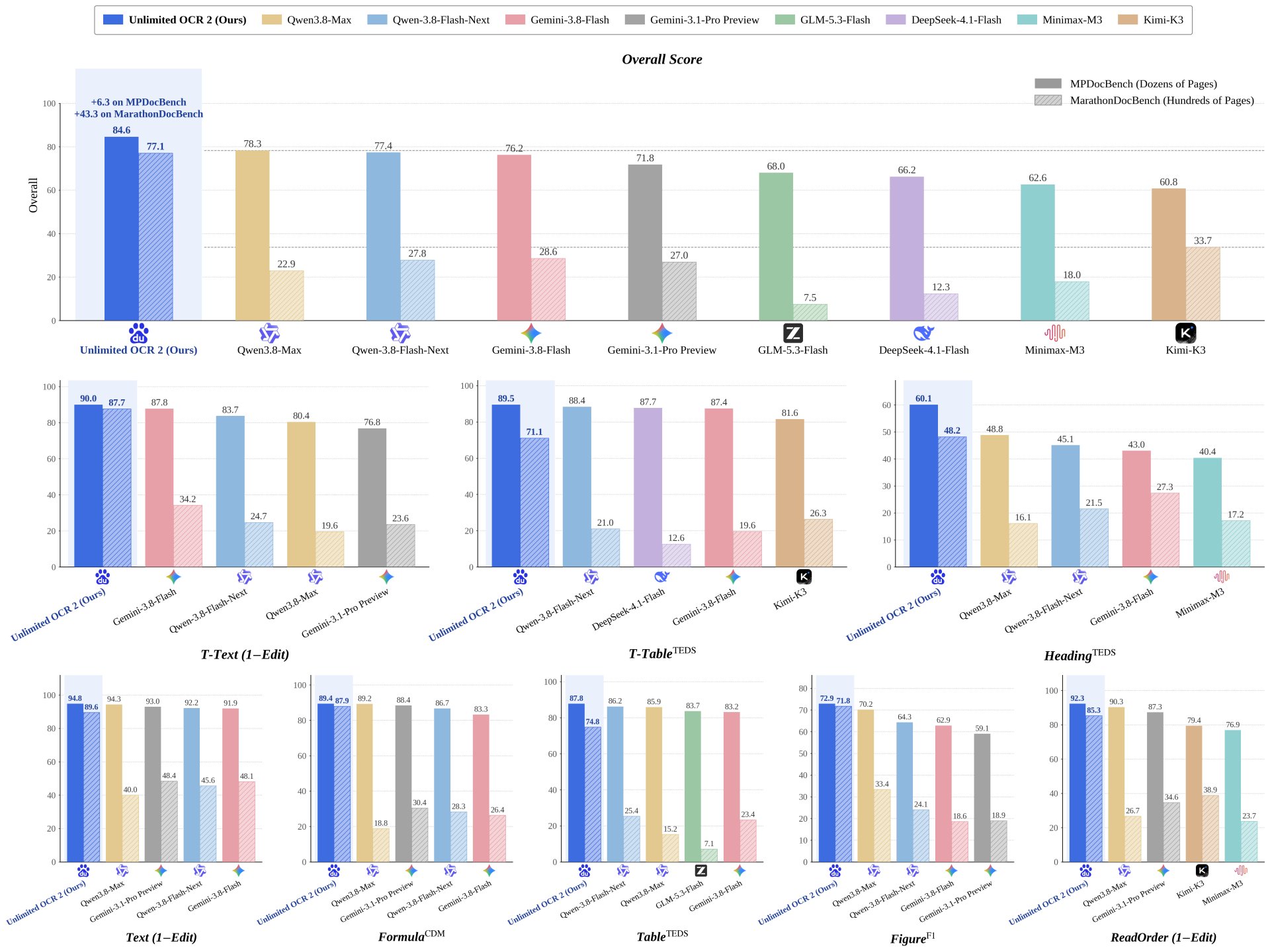
Unlimited OCR 2 is here, and it's open source. 📖 ✨
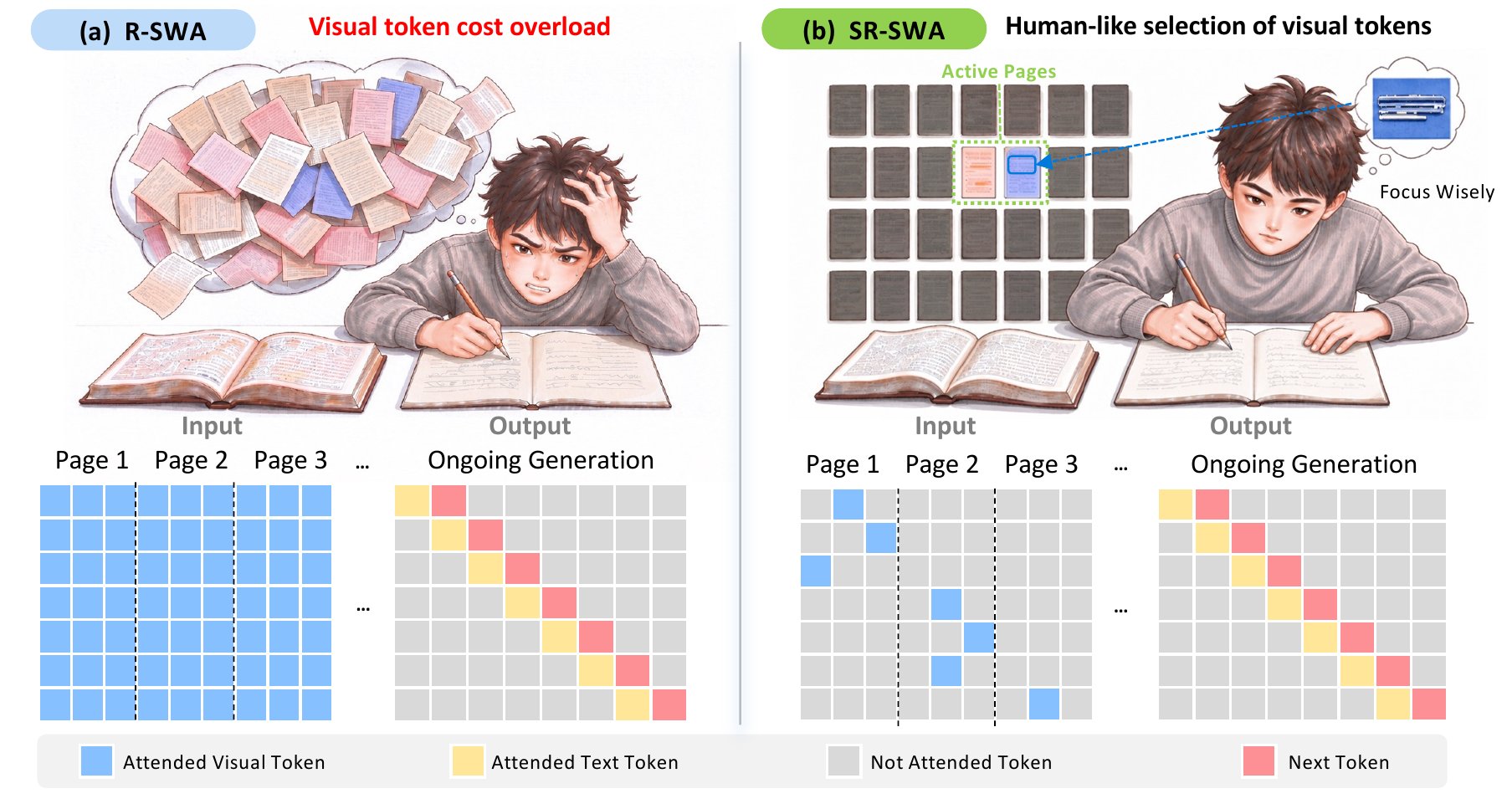
Longer documents can mean a lot more attention computation. Our new SR-SWA mechanism keeps that in check by condensing text-visual attention interactions into a fixed-size set of working references.
Here's what it delivers:
- Document parsing at virtually any length, within a finite context window
- Nearly constant per-step decoding latency and memory footprint as documents grow longer
- State-of-the-art performance on MPDocBench and MarathonDocBench, covering documents from dozens to hundreds of pages
Check out the model here ↓
无限 OCR 2 来了,而且它是开源的。📖 ✨
更长的文档可能意味着更多的注意力计算。我们的新 SR-SWA 机制通过将文本-视觉注意力交互浓缩成固定大小的工作参考集来控制这一点。
以下是它带来的效果:
- 在有限的上下文窗口内,几乎任意长度的文档解析
- 随着文档变长,每步解码延迟和内存占用几乎保持恒定
- 在 MPDocBench 和 MarathonDocBench 上达到最先进的性能,涵盖从几十页到数百页的文档
在这里查看模型 ↓
更长的文档可能意味着更多的注意力计算。我们的新 SR-SWA 机制通过将文本-视觉注意力交互浓缩成固定大小的工作参考集来控制这一点。
以下是它带来的效果:
- 在有限的上下文窗口内,几乎任意长度的文档解析
- 随着文档变长,每步解码延迟和内存占用几乎保持恒定
- 在 MPDocBench 和 MarathonDocBench 上达到最先进的性能,涵盖从几十页到数百页的文档
在这里查看模型 ↓

@renmu2017 @thsottiaux 还可以顺理成章说deepseek蒸馏6.1terra,一举两得

css tip: use tabular-nums for numbers that change.
most fonts give each digit its own width, so a timer or counter wobbles as the digits change.
tabular-nums gives every digit the same width, so the number stays still.
.timer {
  font-variant-numeric: tabular-nums;
}
most fonts give each digit its own width, so a timer or counter wobbles as the digits change.
tabular-nums gives every digit the same width, so the number stays still.
.timer {
font-variant-numeric: tabular-nums;
}
CSS 技巧:对于会变化的数字,使用 tabular-nums。
大多数字体为每个数字赋予不同的宽度,因此计时器或计数器在数字变化时会晃动。
tabular-nums 为每个数字赋予相同的宽度,因此数字保持静止。
大多数字体为每个数字赋予不同的宽度,因此计时器或计数器在数字变化时会晃动。
tabular-nums 为每个数字赋予相同的宽度,因此数字保持静止。
.timer {
font-variant-numeric: tabular-nums;
}
Big win for local LLM inference!
This new inference engine runs LLMs 4x faster than llama.cpp:
I ran Qwen3.5 9B on a base M5 MacBook Pro with three engines:
- llama.cpp: 22.0 tokens/s
- MLX: 25.1 tokens/s
- uzu: 92.1 tokens/s
The video below shows all three runs side by side.
The first two numbers don't mean llama.cpp or MLX are badly built. But both are sitting right under a hard limit of local decoding.
When an LLM generates text, every new token needs one full pass through the model, and that pass reads all of the model's weights from memory.
A base M5 reads memory at about 153 GB/s. A 4-bit 9B model weighs about 5.2 GB.
So at one token per pass, the ceiling is roughly 153 ÷ 5.2 ≈ 29 tokens/s, however fast the GPU computes.
uzu gets past that ceiling by producing several tokens per pass instead of one:
↳ A small drafter (DFlash) proposes candidates for the next 16 positions at once.
↳ A tiny adapter (Weaver, 56.7M params) picks among them left to right, so the guesses form coherent text, and keeps a few alternative branches as a tree.
↳ The 9B model checks the whole tree in a single pass and keeps the longest path it agrees with. The main model still decides every token that ends up in the output.
GitHub repo:
http://
github.com/trymirai/uzu
(don't forget to star it 🌟)
In my run, each pass of the 9B model produced 7.5 tokens on average. Ordinary decoding produces exactly 1.
The weights and kernels are designed around this too. uzu ships its own 4-bit checkpoints, and on M5 chips it runs the verification step on the GPU's int8 matrix path.
uzu is an open-source inference engine by Mirai Labs, written in Rust with Metal kernels. It has Swift, Python, TypeScript and Rust bindings, so the same engine runs inside a Mac or iOS app.
I shared the GitHub repo above.
If you want to dive deeper, my co-founder wrote a detailed breakdown of why local inference is memory-bound and how uzu's speculative decoding gets past it.
Read it below.
本地 LLM 推理取得重大胜利!
这款新推理引擎运行 LLM 的速度比 llama.cpp 快 4 倍:
我在基础版 M5 MacBook Pro 上用三种引擎运行了 Qwen3.5 9B:
- llama.cpp:22.0 令牌/秒
- MLX:25.1 令牌/秒
- uzu:92.1 令牌/秒
下面的视频并排展示了所有三次运行。
前两个数字并不意味着 llama.cpp 或 MLX 构建得不好。但两者都正好处于本地解码的硬性限制之下。
当 LLM 生成文本时,每个新令牌都需要完整通过模型一次,而那次通过会从内存中读取模型的所有权重。
基础版 M5 的内存读取速度约为 153 GB/s。一个 4 位 9B 模型的权重约为 5.2 GB。
因此,每次通过一个令牌,上限大致为 153 ÷ 5.2 ≈ 29 令牌/秒,无论 GPU 计算多快。
uzu 通过每次通过生成多个令牌而不是一个,从而突破了这个上限:
↳ 一个小型草稿器(DFlash)一次性为接下来的 16 个位置提出候选。
↳ 一个微型适配器(Weaver,5670 万参数)从左到右从中挑选,这样猜测形成连贯的文本,并将几个备选分支保留为树状结构。
↳ 9B 模型在一次通过中检查整个树,并保留它同意的最长路径。主要模型仍然决定最终输出中的每个令牌。
GitHub 仓库:
http://
github.com/trymirai/uzu
(别忘了给它点星 🌟)
在我的运行中,9B 模型的每次通过平均生成 7.5 个令牌。普通解码正好生成 1 个。
权重和内核也是围绕这个设计的。uzu 自带 4 位检查点,在 M5 芯片上,它在 GPU 的 int8 矩阵路径上运行验证步骤。
uzu 是 Mirai Labs 的开源推理引擎,用 Rust 编写并带有 Metal 内核。它有 Swift、Python、TypeScript 和 Rust 绑定,因此同一引擎可以在 Mac 或 iOS 应用中运行。
上面分享了 GitHub 仓库。
如果你想深入了解,我的联合创始人写了一篇详细分析,解释了为什么本地推理受内存限制,以及 uzu 的推测解码如何突破它。
在下面阅读。