X 日报:2026-11-23

1个多小时前,DeepSeek Harness 更新到 v0.2.3-alpha.2,我随即将 dsh web 从 v0.2.2-rc.5 升级到 v0.2.3-alpha.2。
升级完成后体验新功能时,我发现在 v0.2.3-alpha.1 预发行版里提到的:新增可选的
升级完成后体验新功能时,我发现在 v0.2.3-alpha.1 预发行版里提到的:新增可选的

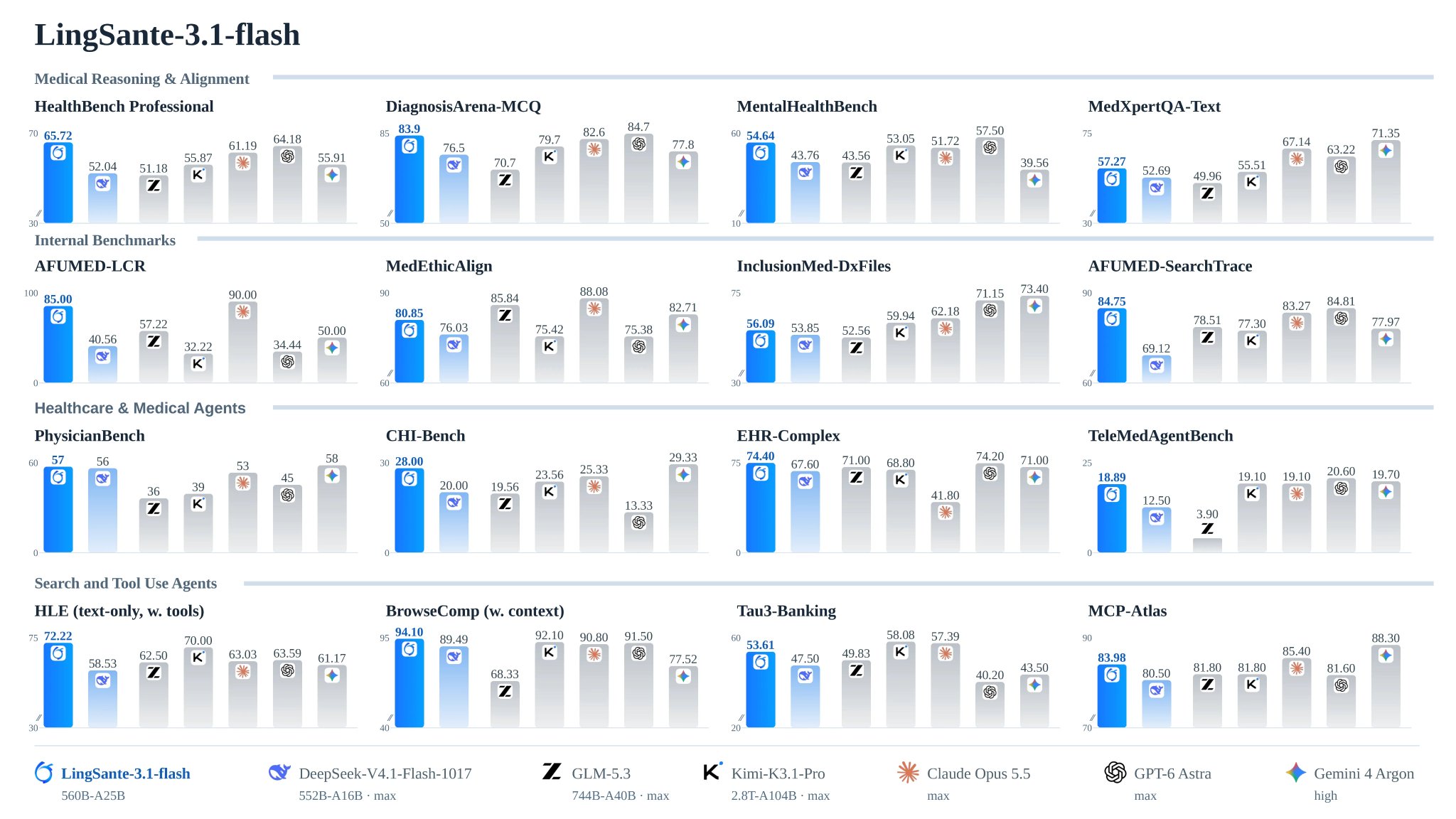
Today, we release LingSante-3.1-flash, an open-weight MoE model with 560B total parameters and 25B activations per token. It unifies diverse medical capabilities while retaining general capabilities, including complex medical reasoning, long-horizon workflow execution, and professional behavior alignment.
LingSante-3.1-flash moves beyond medical QA toward real-world healthcare problem. The model leads on HealthBench Professional (65.72), HLE (text-only, with tools: 72.22) and BrowseComp (with context: 94.10), outperforming GPT-6 Astra, Claude Opus 5.5 and Gemini 4 Argon on all three. LingSante-3.1-flash also performs well on professional long-horizon medical workflows, such as PhysicianBench (57) and EHR-Complex (74.40).
Together, these results establish LingSante-3.1-flash as the leading open-weight models for healthcare.
The weights are available. Explore LingSante and build with it.
More below ↓
今天,我们发布了 LingSante-3.1-flash,这是一个开源权重的 MoE 模型,总参数量为 560B,每令牌激活量为 25B。它统一了多种医疗能力,同时保留了通用能力,包括复杂的医疗推理、长时程工作流执行以及专业行为对齐。
LingSante-3.1-flash 超越了医疗问答,向现实世界的医疗保健问题迈进。该模型在 HealthBench Professional (65.72)、HLE (纯文本,带工具:72.22) 和 BrowseComp (带上下文:94.10) 上领先,超越了 GPT-6 Astra、Claude Opus 5.5 和 Gemini 4 Argon 在这三项上的表现。LingSante-3.1-flash 在专业长时程医疗工作流上也表现出色,例如 PhysicianBench (57) 和 EHR-Complex (74.40)。
这些结果共同确立了 LingSante-3.1-flash 作为医疗保健领域领先的开源权重模型。
权重现已可用。探索 LingSante 并使用它构建。
更多内容在下方 ↓

Andarium 1.1 is released! It added AOT, which significantly boosts performance, reduces heat, and cuts app launch time by 35%. It also added iOS 26 support, 120Hz ProMotion, built-in Magisk, iOS Shortcuts, fake SMS messages, and more!
Download IPA: https://github.com/imxieyi/Kernarium/releases/tag/andarium-1.1
Download IPA: https://github.com/imxieyi/Kernarium/releases/tag/andarium-1.1
Andarium 1.1 发布了!新增了 AOT,显著提升性能、降低发热,并将应用启动时间缩短了 35%。还新增了 iOS 26 支持、120Hz ProMotion、内置 Magisk、iOS 快捷指令、模拟短信等功能!
下载 IPA:
https://
github.com/imxieyi/Kernar
ium/releases/tag/andarium-1.1
…
下载 IPA:
https://
github.com/imxieyi/Kernar
ium/releases/tag/andarium-1.1
…

NSH 新增了 nshm 组件,nshm 可以让我们用 Rust 为 NSH 应用扩展复杂功能和原生能力。
有了 nshm,我们可以首选 TSX 来开发 NSH 应用。TSX 完全能够胜任高性能的桌面 UI;而少量需要更高性能的任务,可以交给 nshm 扩展,让 Rust 来实现。
有了 nshm,我们可以首选 TSX 来开发 NSH 应用。TSX 完全能够胜任高性能的桌面 UI;而少量需要更高性能的任务,可以交给 nshm 扩展,让 Rust 来实现。

Software Engineers in 2026 Orchestrating Claude, Codex, Cursor, Antigravity and other agents.
2026 年的软件工程师:在编排 Claude、Codex、Cursor、Antigravity 这些 agent。

I've been using GLM-5.4 for a while and I can confidently say that it's the best Open Model you can use right now.
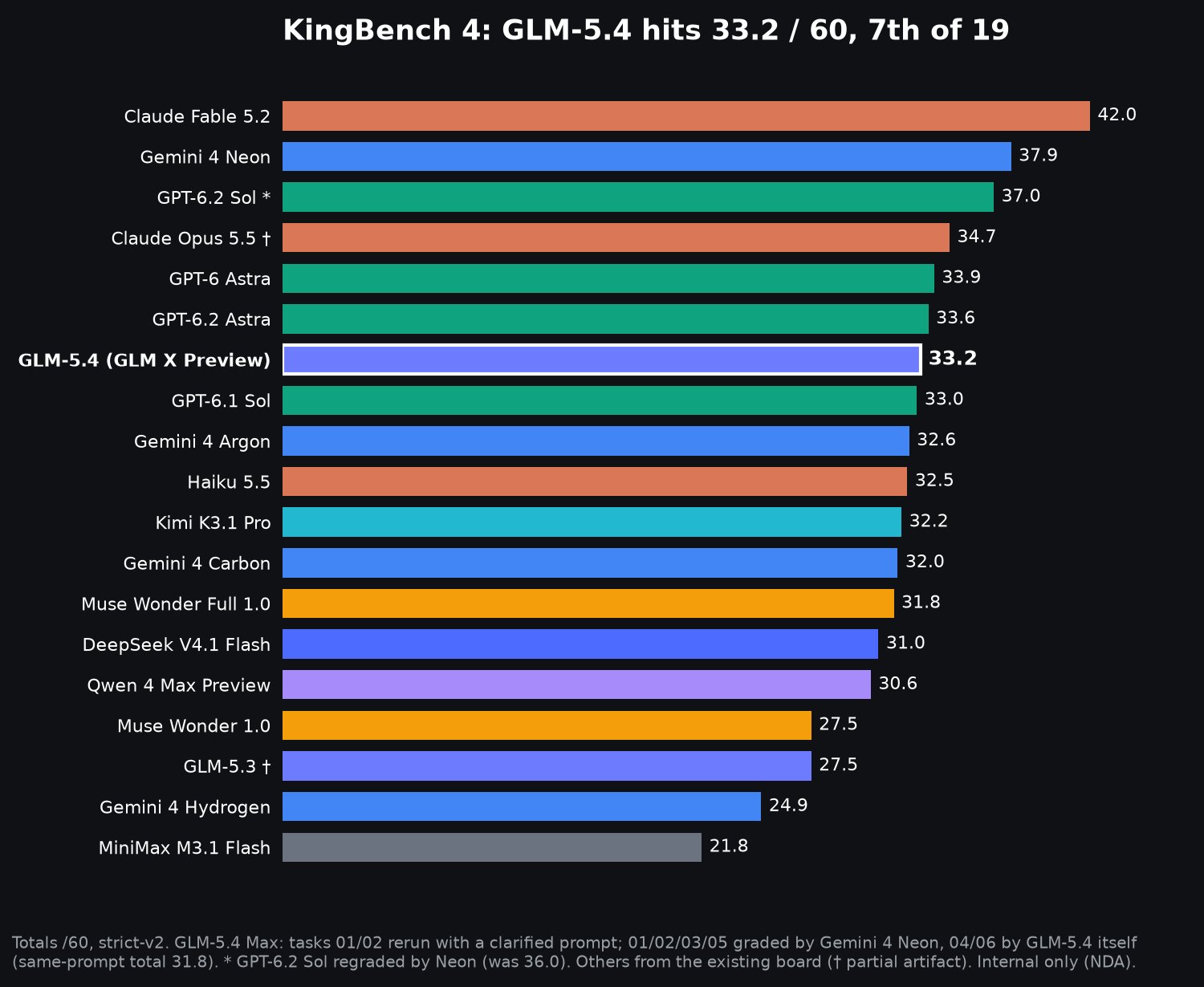
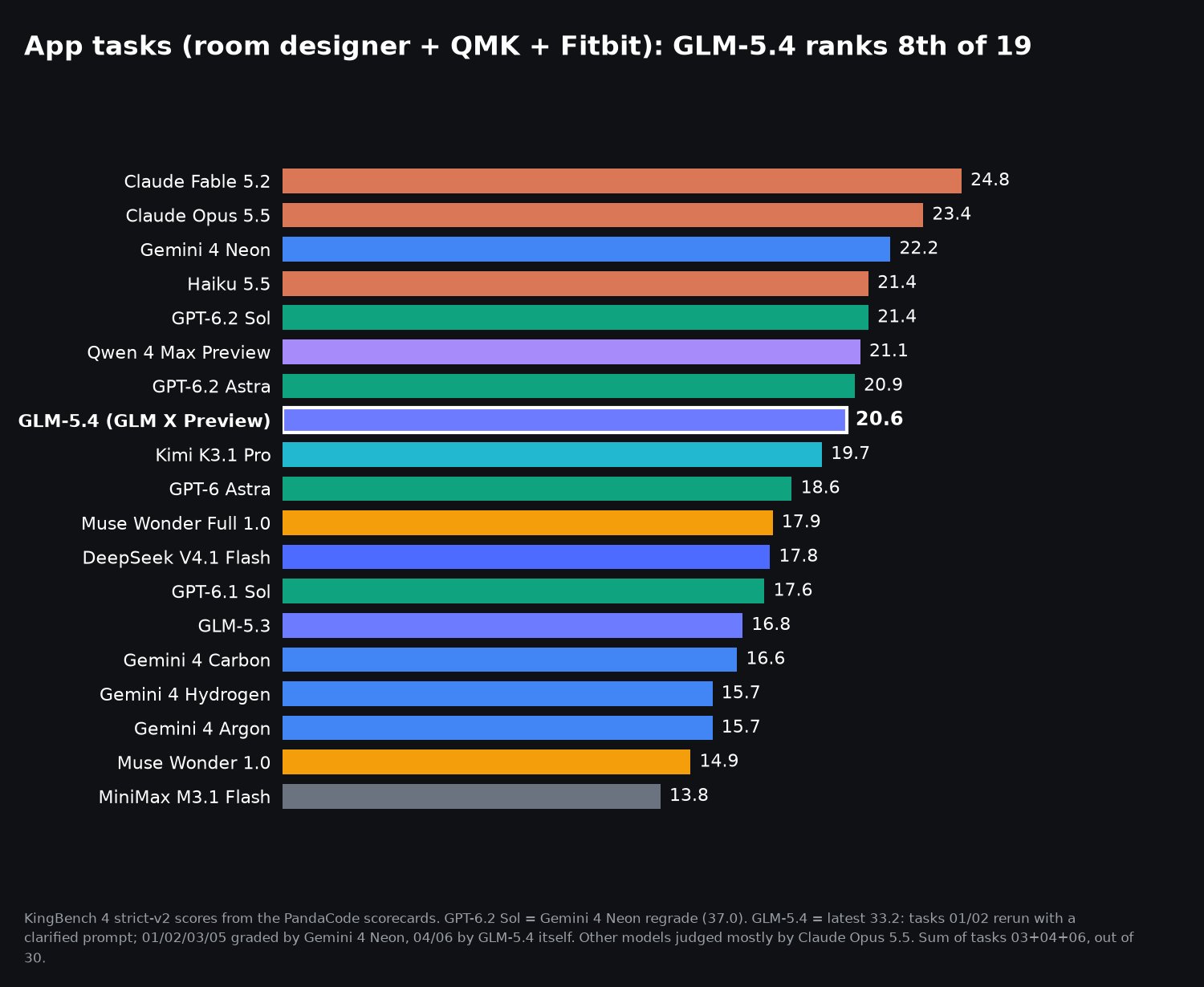
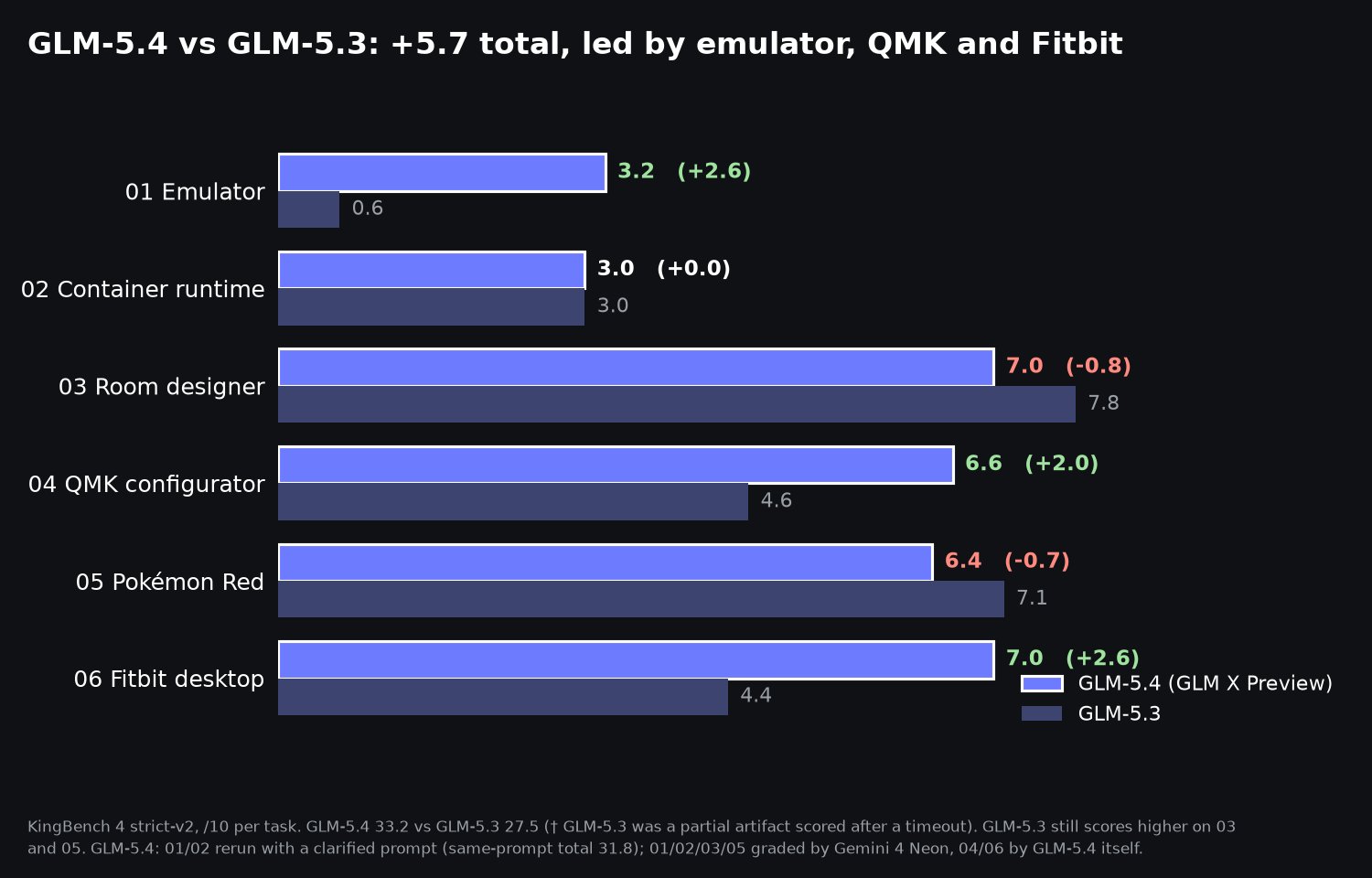
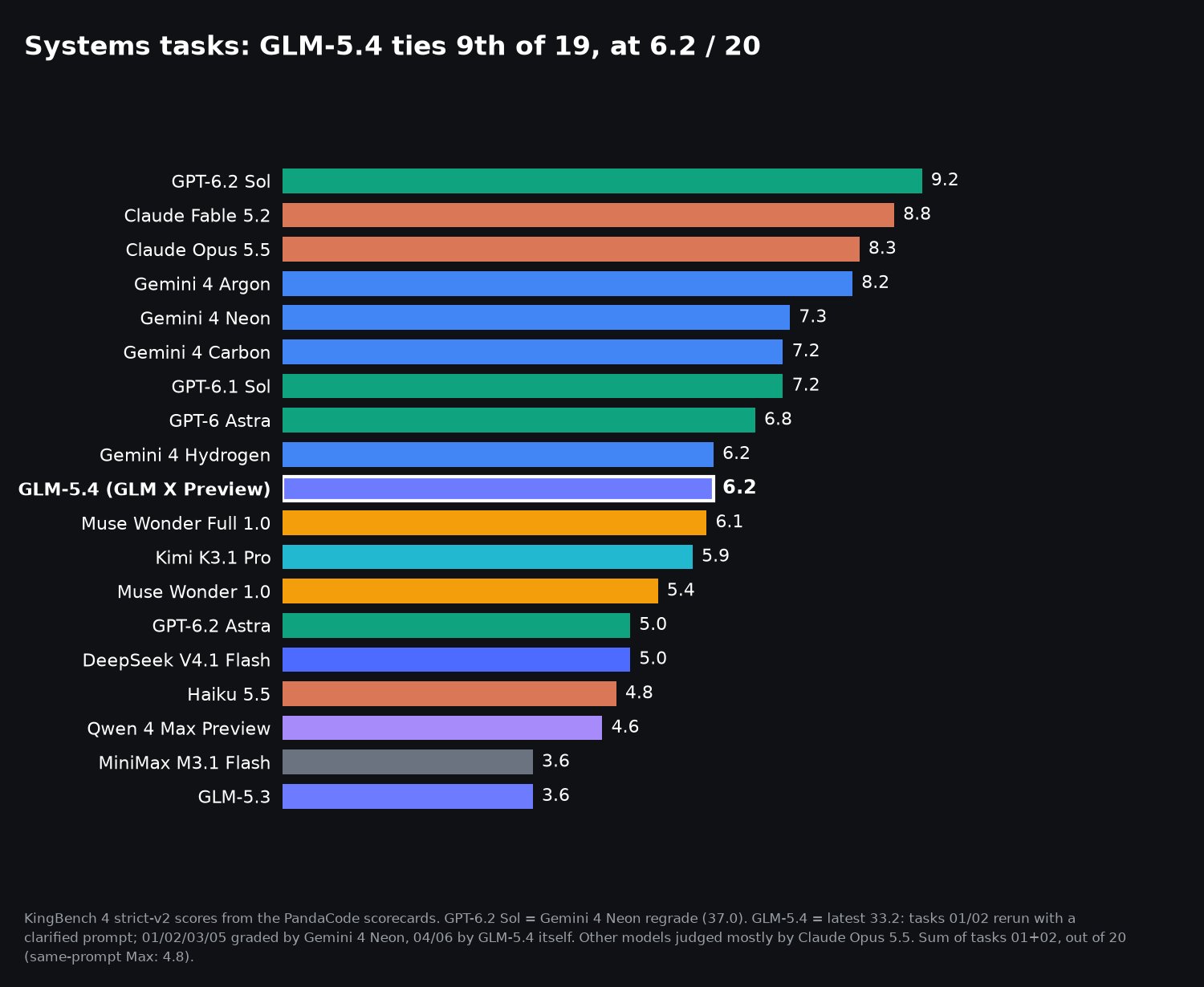
It places itself at #7 on KingBench 4 which is the #1 Open Model placement.
From what I can tell, the model is an honest effort and isn't very benchmaxxed or stuff like that and it has good vibes (just don't look at the reasoning tokens... you feel sad for the model at times)
As much as I know it's a looped transformer with 700B params and a technical report shall come later.
It's the most careful model that I have ever used... It has found out many bugs and security vulns in my apps that others haven't (incl. Fable). That's not say that it's the best either. The model takes a lot of time to reach a conclusion to a task especially the Max effort can make it spiral down for a while.
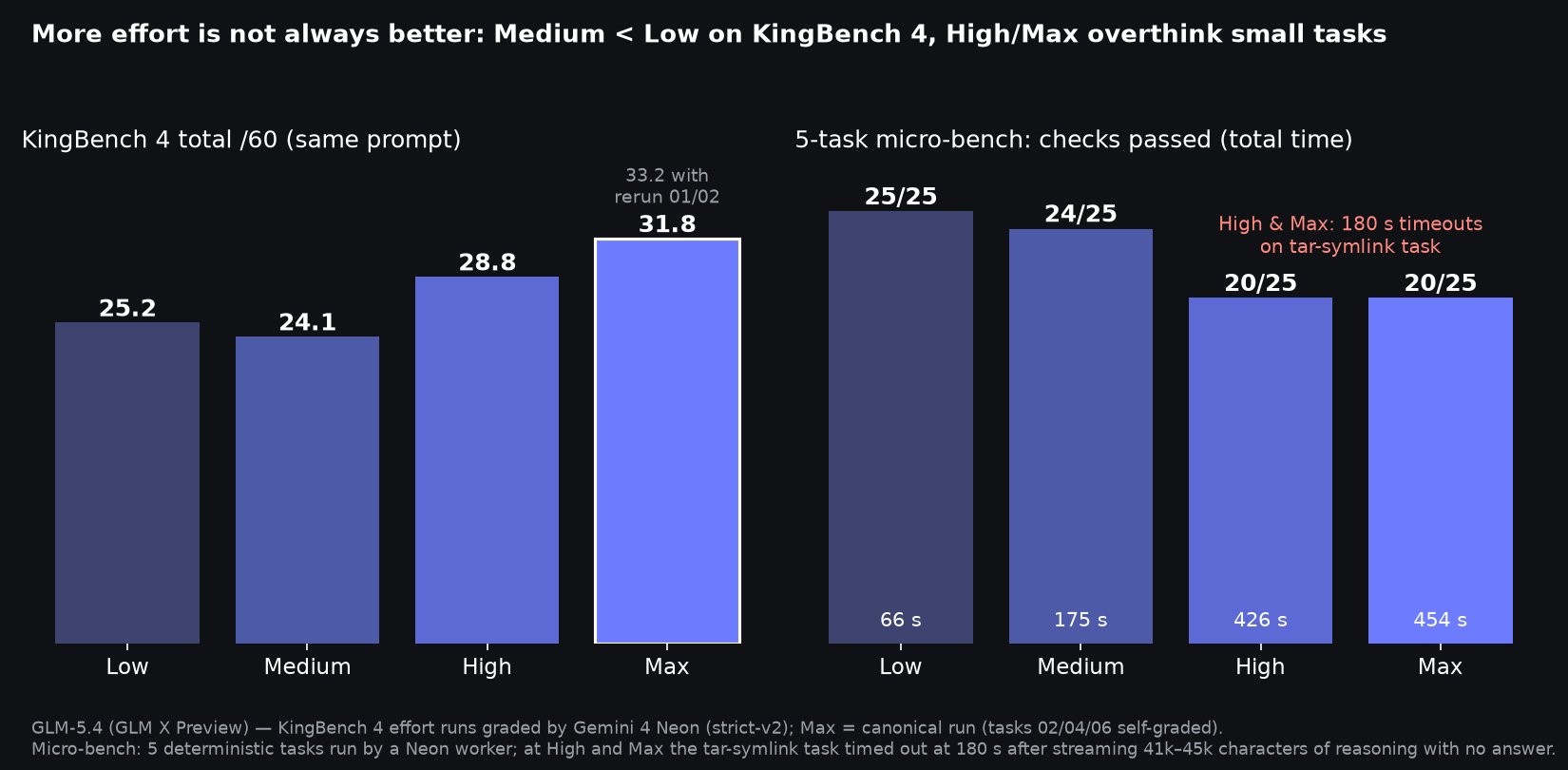
It is on average about 4x slower than Neon on Max reasoning effort. At Medium reasoning effort this does indeed but at the cost of performance. High is the best sweet spot for me.
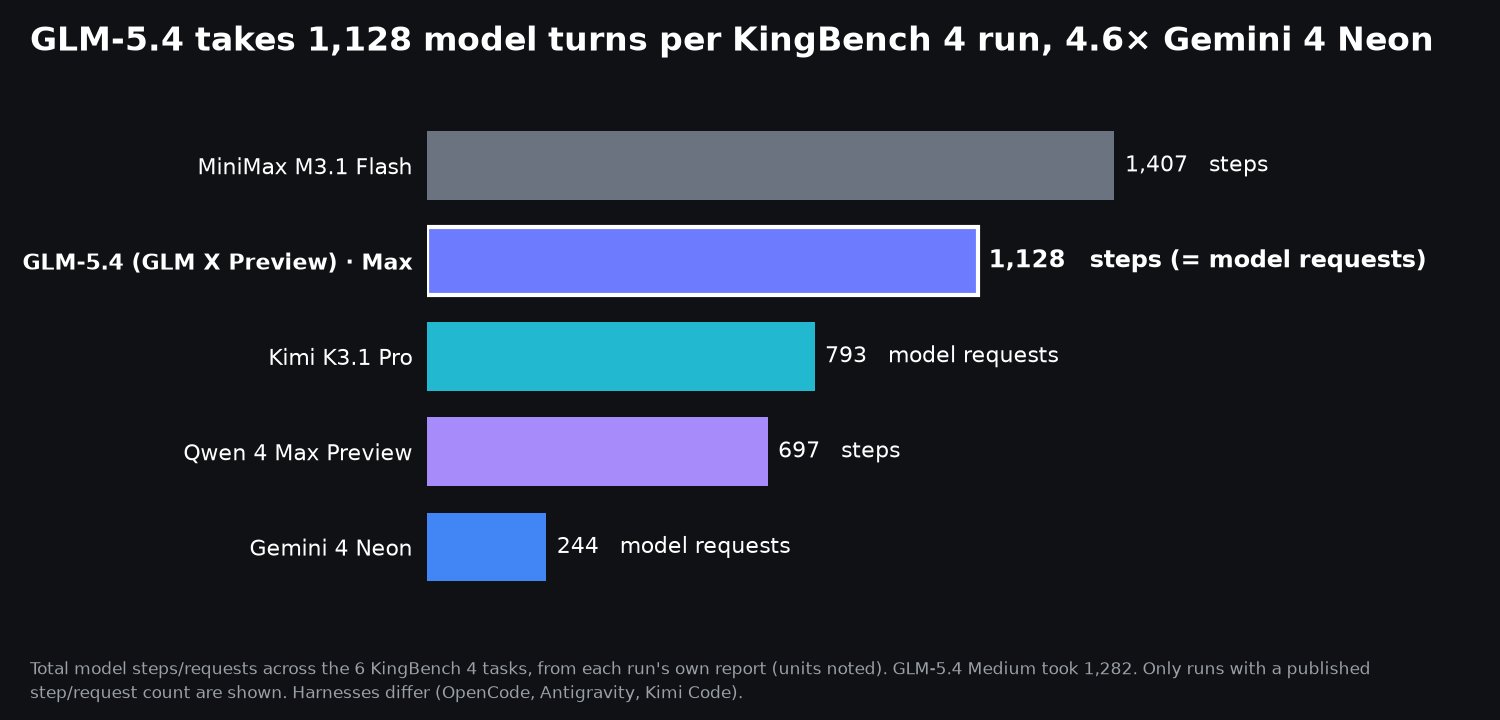
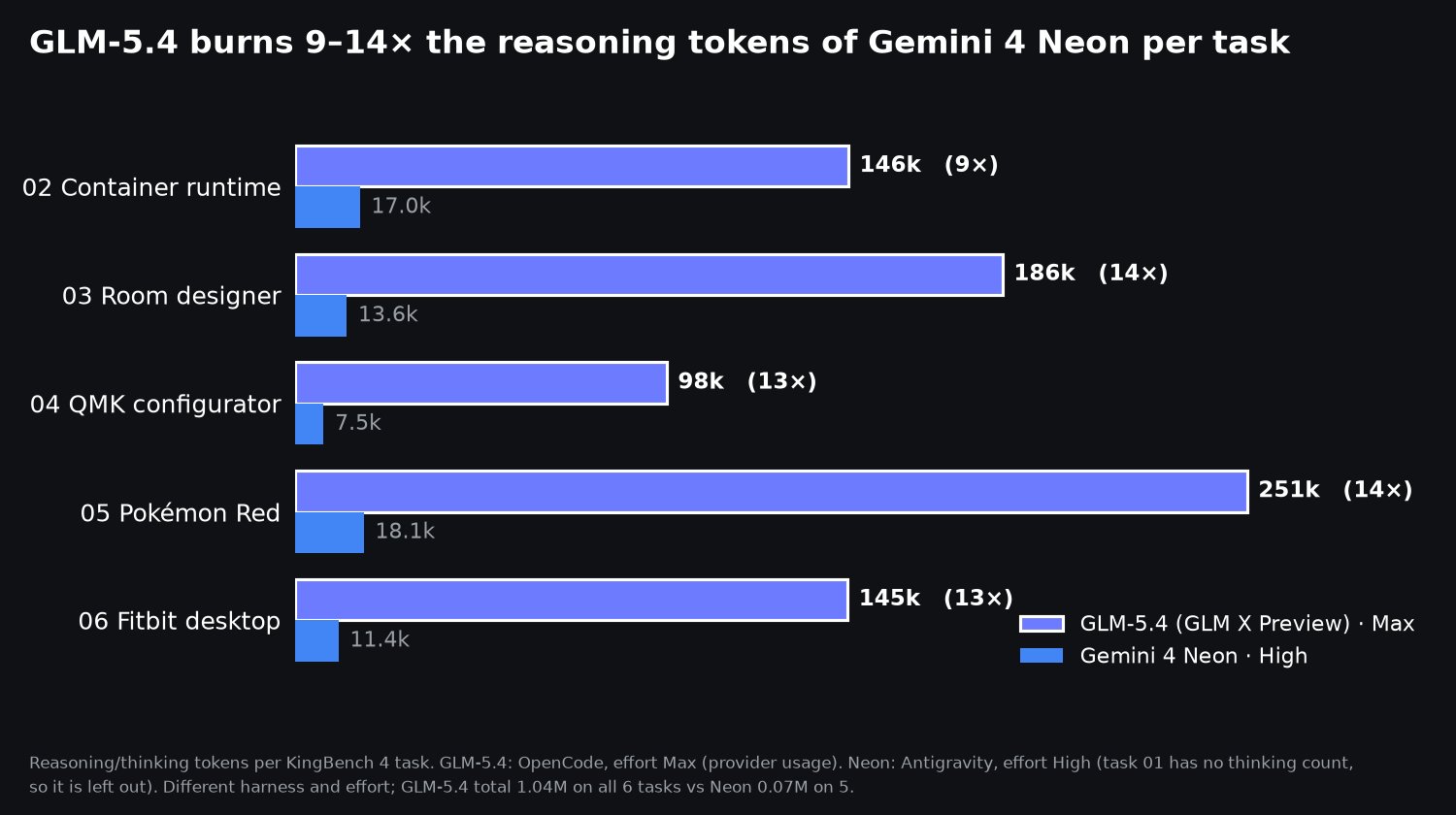
It isn't slow because of TPS btw.. KingBench 4 took 431 minutes against Neon's 109. Each step isn't slower (22.9 s, against 26.7 s for Neon); it just takes far more of them, 1,128 against 244. It also reasoned 1.04M tokens against Neon's roughly 0.07M. About three-quarters of its time is spent generating and a quarter running builds and tests.
I wouldn't recommend you to just use this model but keeping it as a reviewer for work and making it work on more complex architecture or searching for bugs, security vulnerabilities is really worth it imo.
This is a model that you can use end-to-end on work without much issues but it isn't the best or SOTA.
I have it in my council of reviewers at all time before shipping anything and I am really happy about that.
How it behaves:
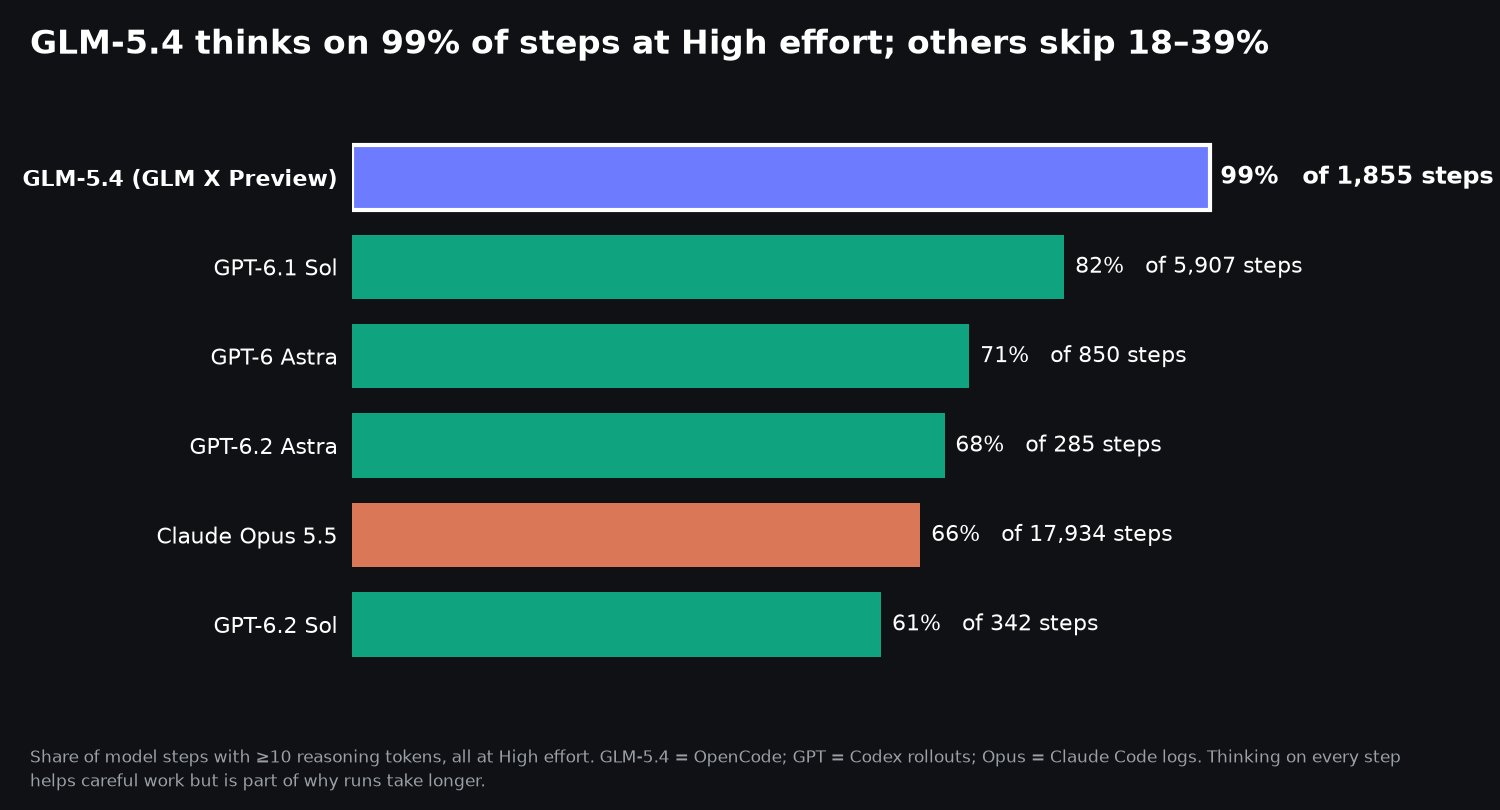
It reasons on almost every step. Under 1% of its steps have near-zero reasoning, against 14–39% for the GPT models. Max gives about 1.5× the reasoning of High.
It overthinks. On a security task, High and Max both hit the 180 s timeout while still thinking, and Medium passed in 95 s.
Tool errors are mid-pack. It fails 1.56% of tool calls across all harnesses, 11th of 17, and most of the failures are bad arguments to the edit tool.
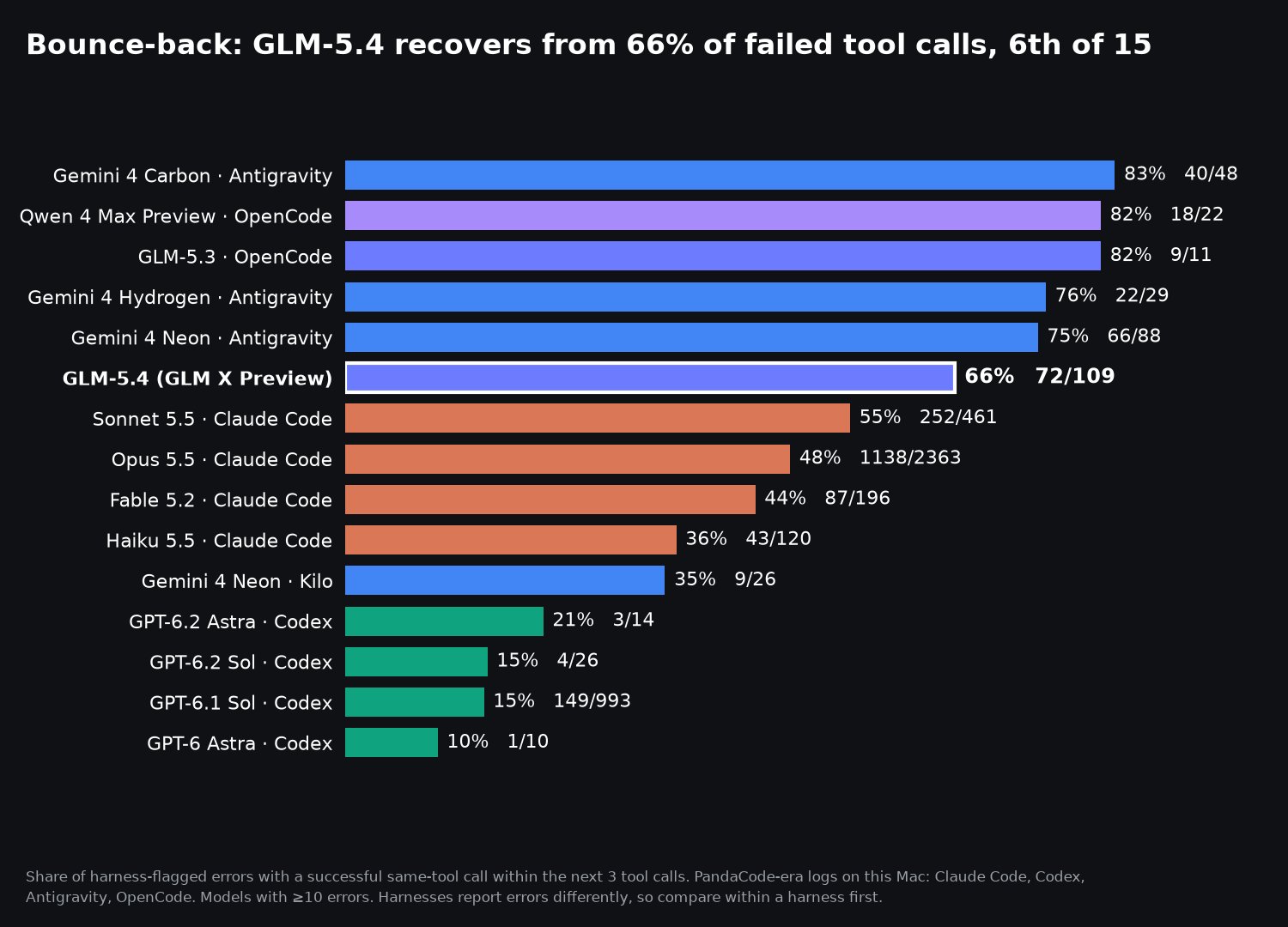
It recovers well, though: 66% of failed calls are followed by a working retry, better than every Claude and Codex model.
Caching is excellent at 96–99%, and median time to first token is quick at 4.1 s.
Here's when you should use it:
- You don't care about 3d or Frontend
- You care a lot about shipping no bugs or security vulns. then either make it write it's own code and also review it with a council or just keep it as a reviewer
- You need a really good planner for your work
- You need a model that gets the bigger picture (it's hard to explain but it gets the bigger picture of a work much better than others)
I like the vibes with this model and can't wait for what a bigger model with similar arch can do.
PandaCode's Orchestrator uses it where it should for you automatically.. so, you can plug it in and see some better results with orchestration overall:
https://
github.com/aicodeking/pan
dacode
…
Also, a thanks to the
@Zai_org
team for letting me be 100% honest about the model and it's vibes. This review or anything isn't sponsored in any way btw it's all my own thoughts and they haven't seen any of this before your eyes.
Full Review video here:
https://
youtube.com/watch?v=AnTx-v
ALNH4
…
我已经使用 GLM-5.4 一段时间了,我可以自信地说,它目前是你能用到的最好的开源模型。
它在 KingBench 4 上排名第 7,这是开源模型中的第 1 名位置。
据我观察,这个模型是一个诚实的努力产物,并没有过度优化基准测试什么的,它给人一种好感觉(只是别去看它的推理令牌……有时候你会为这个模型感到难过)。
据我所知,它是一个循环变换器,有 700B 参数,技术报告稍后会发布。
它是我用过的最谨慎的模型……它在我的一些应用中发现了许多其他模型没发现的 bug 和安全漏洞(包括 Fable)。这并不是说它就是最好的。这个模型在得出任务结论时需要花费很多时间,尤其是最大努力模式会让它陷入长时间的循环。
在最大推理努力下,它平均比 Neon 慢 4 倍。在中等推理努力下,它确实能做到,但代价是性能。高难度是我觉得的最佳平衡点。
顺便说一句,它慢不是因为 TPS……KingBench 4 它用了 431 分钟,而 Neon 只用了 109 分钟。每一步并不慢(22.9 秒,对比 Neon 的 26.7 秒);只是它需要更多步骤,1128 步对比 244 步。它还推理了 1.04M 个令牌,对比 Neon 大约 0.07M 个。它大约四分之三的时间花在生成上,四分之一时间用于运行构建和测试。
我不建议你只用这个模型,但把它当作工作中的审查者,让它处理更复杂的架构或搜索 bug、安全漏洞,这真的很值得 imo。
这是一个你可以端到端用于工作的模型,不会出太多问题,但它不是最好的或 SOTA。
在发布任何东西之前,我总是让它加入我的审查者委员会,我对此真的很满意。
它的行为表现:
它几乎每一步都在推理。不到 1% 的步骤几乎没有推理,对比 GPT 模型的 14–39%。最大努力大约是高难度的 1.5 倍推理量。
它过度思考。在一个安全任务中,高难度和最大努力都达到了 180 秒超时,还在思考,而中等难度在 95 秒内通过。
工具错误处于中等水平。它在所有测试套件中工具调用失败率为 1.56%,17 个模型中排第 11,大多数失败是因为编辑工具的参数错误。
不过它恢复得很好:66% 的失败调用后跟了一个成功的重试,比所有 Claude 和 Codex 模型都好。
缓存效果优秀,96–99%,首令牌中位时间很快,只有 4.1 秒。
以下是你应该使用它的时候:
- 你不在乎 3D 或前端
- 你非常在意发布时没有 bug 或安全漏洞。那么要么让它自己写代码,然后用委员会审查它,要么就单纯把它当作审查者
- 你需要一个真正优秀的规划者来处理你的工作
- 你需要一个能抓住大局的模型(这很难解释,但它对工作的整体把握比其他模型好得多)
我喜欢这个模型的氛围,迫不及待想看看更大规模的类似架构模型能做什么。
PandaCode 的 Orchestrator 会自动在合适的地方使用它……所以,你可以直接接入它,看看整体编排结果会有所提升:
https://
github.com/aicodeking/pan
dacode
…
另外,感谢
@Zai_org
团队让我能 100% 诚实地谈谈这个模型及其氛围。这个评论或任何内容都没有任何赞助,这完全是我自己的想法,他们在你看到之前也没见过这些。
完整评论视频在这里:

从细节了解习主席
下意识反应说明一个人的底色,习近平是一个实事求是的人
下意识反应说明一个人的底色,习近平是一个实事求是的人
With nshm, you can write almost the entire NSH app in TSX — and only drop into Rust when you actually need native power.
nshm lets you package Rust code as a module and import it directly from TSX. The Rust runs natively on every platform, while your UI, state, and screens stay in TSX (hot reload, fast iteration).
Use it for the things TSX shouldn’t do:
- High-performance image/video processing
- Real-time analysis or decoding
- Large file parsing, indexing, and search
- Extra OS-level APIs
- Either keep the Rust in your project’s ext/ folder, or pull in community modules:
nsh add nsh-omarchy
Most of the app stays TSX. The hard parts are Rust. Same reactive model, same platforms.
https://
nsh.dev/versions/main/
docs/nshm/
…
使用 nshm,你可以用 TSX 编写几乎整个 NSH 应用——只有在真正需要原生性能时才切换到 Rust。
nshm 让你将 Rust 代码打包成模块,并直接从 TSX 导入。Rust 在每个平台上原生运行,而你的 UI、状态和屏幕保持在 TSX 中(热重载、快速迭代)。
将其用于 TSX 不适合做的事情:
- 高性能图像/视频处理
- 实时分析或解码
- 大文件解析、索引和搜索
- 额外的操作系统级 API
- 要么将 Rust 保留在你项目的 ext/ 文件夹中,要么引入社区模块:
nsh add nsh-omarchy
应用的大部分保持 TSX。难点部分用 Rust。相同的响应式模型,相同的平台。
https://
nsh.dev/versions/main/
docs/nshm/
…
nshm 让你将 Rust 代码打包成模块,并直接从 TSX 导入。Rust 在每个平台上原生运行,而你的 UI、状态和屏幕保持在 TSX 中(热重载、快速迭代)。
将其用于 TSX 不适合做的事情:
- 高性能图像/视频处理
- 实时分析或解码
- 大文件解析、索引和搜索
- 额外的操作系统级 API
- 要么将 Rust 保留在你项目的 ext/ 文件夹中,要么引入社区模块:
nsh add nsh-omarchy
应用的大部分保持 TSX。难点部分用 Rust。相同的响应式模型,相同的平台。
https://
nsh.dev/versions/main/
docs/nshm/
…

Liquid Glass is now built on
@uisdk
.
Keyboard, focus, forms and ARIA come from UI SDK. The glass is one WebGL2 shader. Open source, MIT.
Thanks
@shadcn
and
@vercel
for UI SDK.
Demo:
https://
liquid-glass-interface.pages.dev
GitHub:
https://
github.com/bilalgursen/li
quid-glass
…
@uisdk
.
Keyboard, focus, forms and ARIA come from UI SDK. The glass is one WebGL2 shader. Open source, MIT.
Thanks
@shadcn
and
@vercel
for UI SDK.
Demo:
https://
liquid-glass-interface.pages.dev
GitHub:
https://
github.com/bilalgursen/li
quid-glass
…
Liquid Glass 现在基于
@uisdk
构建。
键盘、焦点、表单和 ARIA 来自 UI SDK。玻璃是一个 WebGL2 着色器。开源,MIT。
感谢
@shadcn
和
@vercel
提供 UI SDK。
演示:
https://
liquid-glass-interface.pages.dev
GitHub:
https://
github.com/bilalgursen/li
quid-glass
…
@uisdk
构建。
键盘、焦点、表单和 ARIA 来自 UI SDK。玻璃是一个 WebGL2 着色器。开源,MIT。
感谢
@shadcn
和
@vercel
提供 UI SDK。
演示:
https://
liquid-glass-interface.pages.dev
GitHub:
https://
github.com/bilalgursen/li
quid-glass
…
The ambition behind NSH is to build a high-performance, native framework that covers every platform.
Native experience, high performance, low resource usage, developer productivity, cross-platform support, and the components needed to build professional apps.
NSH: We want it all!
We’re challenging the leading UI frameworks: Electron, Tauri, React Native, Flutter, GPUI, Qt, and Slint.
I put together a detailed comparison of each framework’s architecture, strengths, and trade-offs, and how NSH approaches them:
NSH 的目标是构建一个高性能的原生框架,覆盖所有平台。
原生体验、高性能、低资源占用、开发者生产力、跨平台支持,以及构建专业应用所需的所有组件。
NSH:我们想要全部!
我们正在挑战领先的 UI 框架:Electron、Tauri、React Native、Flutter、GPUI、Qt 和 Slint。
我整理了一份详细的比较,涵盖每个框架的架构、优势和权衡,以及 NSH 如何应对它们:
原生体验、高性能、低资源占用、开发者生产力、跨平台支持,以及构建专业应用所需的所有组件。
NSH:我们想要全部!
我们正在挑战领先的 UI 框架:Electron、Tauri、React Native、Flutter、GPUI、Qt 和 Slint。
我整理了一份详细的比较,涵盖每个框架的架构、优势和权衡,以及 NSH 如何应对它们: